Starting a Digital Marketing Career: A Simple Guide for Beginners

Starting a career in digital marketing is exciting. But it can also feel scary, especially at the start.
You may look at experienced marketers on LinkedIn, Instagram, or TikTok and ask yourself: "Do I know enough to get a job?" "What if I get a client and I cannot do the work?" "How do I get experience when every job wants experience?"
If you have asked these questions, you are not alone.
The truth is simple: starting is the hardest part. You may have taken a course, earned a certificate, watched many videos, or learned tools like Canva, Meta Ads Manager, Google Analytics, ChatGPT, or Google Ads. But knowing a tool is not the same as using it on a real project.
That is where your journey really begins.
Why This Is a Good Time to Start
You do not need to take our word for it. The numbers back it up.
The global digital marketing industry is worth well over a trillion dollars, and demand for digital skills keeps climbing as more business moves online. In the United States, jobs for marketing managers and related digital roles are expected to grow faster than the average for all jobs over the next several years, and roles like SEO specialist, content strategist, and performance marketer are currently listed among the most in-demand marketing jobs.
Companies are also struggling to find people with real, hands-on skills. Recent hiring research shows that a large share of marketing and creative leaders say it is harder to find skilled talent than it was a year ago, even though hiring for marketing roles keeps growing. This is good news for beginners who are willing to build practical skills and prove them with real work.
One thing has changed, though: entry-level work now expects more than posting on social media. Employers increasingly want beginners who understand strategy, basic data, and how to use AI tools well; not just how to schedule a post. That is not a reason to feel discouraged. It is a reason to learn a little bit of everything as you go, which this guide will help you do.
You Don't Need to Know Everything to Start
One of the biggest mistakes beginners make is waiting until they feel fully ready.
You might think:
"I need to learn SEO first." "I need to master social media management." "I need to become an expert in paid ads." "I need five years of experience before I even apply."
You don't.
Digital marketing is a big field, and no one knows everything. Even experienced professionals keep learning, because platforms, algorithms, tools, and customer habits keep changing.
As a beginner, your goal is not to know everything.
Your goal is to know enough to start, then learn as you go.
Your First Project Matters
Sometimes all you need is one opportunity, one project, and one chance to prove yourself.
Your first project does not need to be with a big company. It could be helping a small business with its social media, creating content for a personal brand, managing a Facebook or Instagram page, doing simple keyword research, designing graphics, writing blog posts, or running a small ad campaign.
Don't underestimate small opportunities.
Your first project can help you:
- Build your portfolio
- Gain real experience
- Learn how clients think and work
- Improve your communication
- Build confidence
- Get testimonials and referrals
- Discover your strengths
- Open the door to bigger opportunities
Experience builds confidence, and confidence grows through action.
Don't Be Afraid of Your First Client
Many beginners fear getting a client and then feeling like they don't know enough.
Remember this:
Your client does not expect you to know everything. They expect you to solve their problem.
If you manage social media, learn who the client's audience is and create content that fits their goals.
If you do SEO, focus on helping people find the business online.
If you run ads, understand the goal, the audience, the budget, and how to check if the ad is working.
If you create content, focus on saying the brand's message clearly.
You don't need to act like an expert. You need to be willing to look things up, ask questions, test ideas, check results, and improve.
Start With One Digital Marketing Skill
Digital marketing has many parts, including:
- Social media marketing
- Search engine optimisation (SEO)
- Content marketing
- Email marketing
- Paid advertising (Google Ads, social ads)
- Marketing analytics (checking your numbers and results)
- Copywriting
- Graphic design
- Influencer marketing
- Video marketing
- Marketing automation
- AI-powered marketing
You do not have to master all of them at once.
Pick one area you enjoy and get good at it first.
For example, if you enjoy social media, start with social media management.
Learn how to:
- Create a simple content plan
- Research who the audience is
- Come up with content ideas
- Write captions people want to read
- Design basic graphics (Canva is a good free tool)
- Schedule posts
- Check how posts are performing
- Write a simple report of the results
Once you feel confident, you can add other skills on top.
Free ways to learn the basics
You do not need to spend a lot of money to start learning. Some well-known platforms offer free or low-cost training that recruiters recognize:
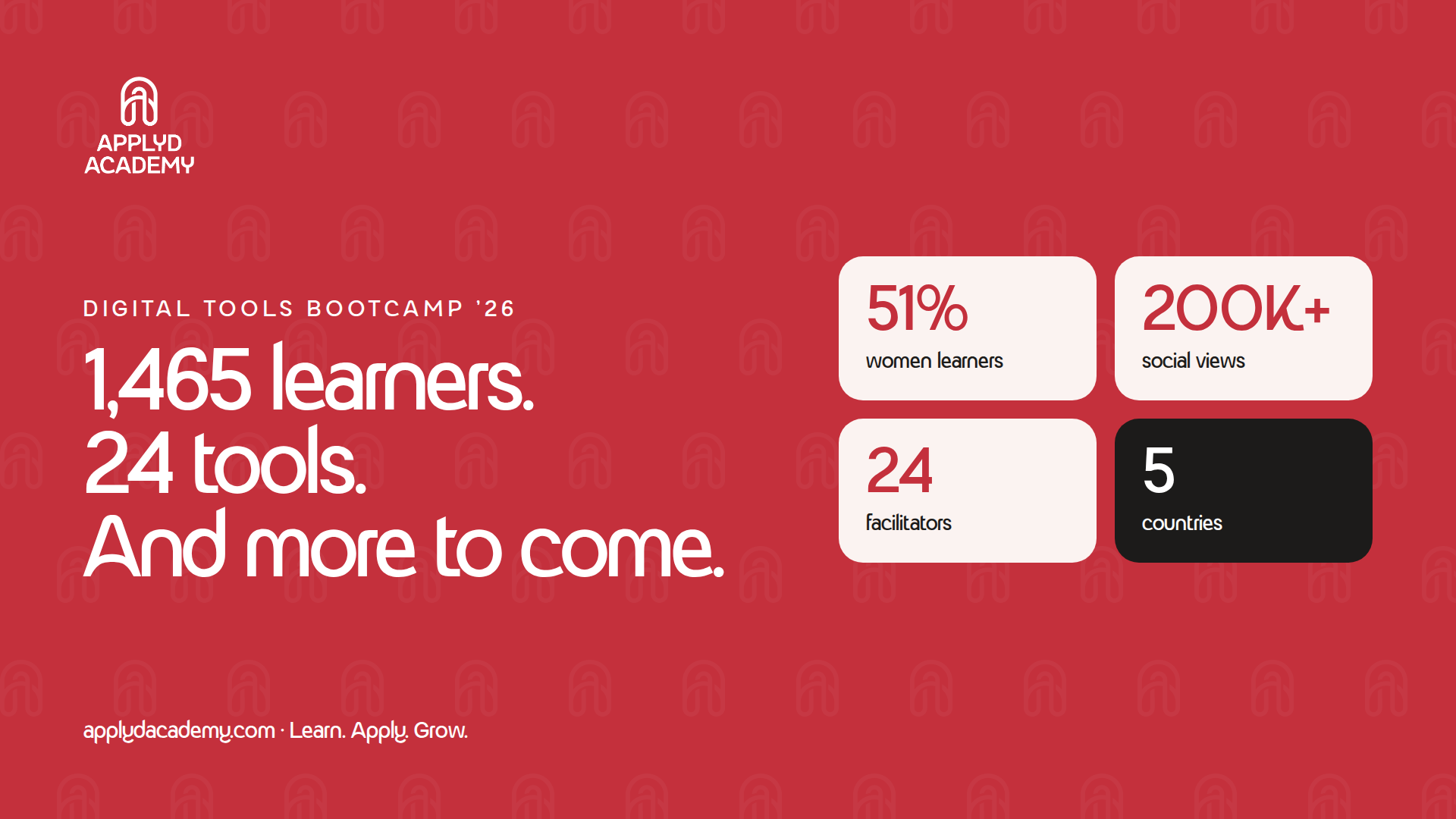
- Applyd Academy- Free and Paid Courses
- Google Skillshop – free certificates for Google Ads and Google Analytics
- HubSpot Academy – free courses on inbound marketing, content, and email marketing
- Meta Blueprint – free training on Facebook and Instagram ads
- Semrush Academy – free courses on SEO and content marketing
- LinkedIn Marketing Labs – free courses for B2B marketing
A certificate alone will not get you a job. But it shows you can finish something, it gives you real knowledge, and it gives you something to talk about in an interview. Pair a free certificate with a real project, and you already stand out from people who only have theory.
Make LinkedIn Work For You
Many beginners forget that LinkedIn is not just a place to post a resume. It is often the first thing a recruiter checks after you apply for a job, so it deserves real attention.
A few things make a real difference:
- Write a clear headline. Instead of just "Digital Marketer," say what you actually do — for example, "Digital marketer focused on social media content and email campaigns." Recruiters often search LinkedIn using keywords like "SEO," "content marketing," or "paid ads," so use the words that match the work you want.
- Use your summary to tell a short story. Say who you are, what kind of work you do, and where you want to go. Include the same keywords naturally.
- Use the "Featured" section as a mini portfolio. You can pin sample projects, articles, graphics, or case studies directly to your profile, so recruiters see your work without needing extra links.
- Add certificates and badges. Google, HubSpot, and Meta certifications can be added directly to your LinkedIn profile, and they are visible when recruiters search by skill.
- Ask for endorsements and recommendations from anyone you've worked with, even on a small or unpaid project. A short recommendation from a real client carries real weight.
- Post and engage regularly. Sharing an article, a comment, or a lesson you learned shows that you are actively interested in the field, not just looking for a job.
One more thing recruiters consistently look for: numbers. A line like "Managed social media accounts" says very little. A line like "Grew Instagram engagement by 42% in three months" or "Increased email open rates from 18% to 34%" proves you can produce results, even from a small or sample project. Whenever you finish a project, write down what changed because of your work, even a rough estimate, so you have real numbers to use later on your resume, portfolio, and LinkedIn profile.
Build a Portfolio Even If You Don't Have Clients
"But I don't have experience."
That's okay. You can create your own experience.
Pick a business, a personal brand, a school, a charity, or even a made-up company, and build a sample project.
For example, you could create:
- A 30-day social media content calendar
- A simple SEO plan
- A social media audit (a review of what a brand is doing well and badly)
- A Google Ads campaign structure
- A sample email marketing campaign
- A competitor analysis
- A short marketing report
- A landing page
- A redesign idea for a brand's social media
These projects can go straight into your portfolio.
One important rule: always label these clearly as sample, personal, or practice projects, not as real paid client work.
A few practical tips make a portfolio much stronger:
- Keep it short. Around 4 to 6 of your best projects is enough. Too many projects means a recruiter might click on your weakest one first.
- Put your most relevant work first. If you're applying for an SEO role, lead with SEO work — don't make someone scroll past five graphic design samples to find it.
- You don't need to know how to code. A simple website builder like Wix, Squarespace, or WordPress is enough to host a portfolio. Some people build their portfolio entirely inside LinkedIn's Featured section instead.
- Make it easy to contact you. Include a clear way to reach you — an email, a form, or a simple "let's talk" button.
- Describe each project clearly. For each one, briefly explain the problem you were solving, what you actually did, and what changed as a result. Vague descriptions are far less convincing than a short, specific story.
Your portfolio only needs to prove one thing:
"I can do the work."
Learn a Little Every Day
Digital marketing moves fast.
A strategy that works today may not work as well next year. New platforms appear, algorithms change, AI tools improve, and people's habits shift. This is part of why entry-level marketing jobs now expect more than basic tasks — the bar keeps rising.
So don't stop learning after one course. Make it a habit.
Each day, you could:
- Read one industry article
- Watch a short tutorial
- Take a bit of an online course
- Study one successful campaign
- Analyse one brand's marketing
- Practise with a tool
- Create one piece of content
- Try a small new strategy
- Follow experienced marketers
- Look back at your own results
You don't need eight hours a day.
Even one focused hour a day adds up over time.
Don't Compare Your Beginning to Someone Else's Middle
This matters a lot for beginners.
You may see someone with thousands of followers, a full agency, or international clients, and wonder why you're not there yet.
Remember: you are seeing their results, not their whole journey.
You don't see how many applications they sent.
You don't see how many clients said no.
You don't see how many campaigns failed.
You don't see how many times they had to start over.
Instead of comparing yourself to them, ask:
"Am I better than I was yesterday?"
That is the only comparison that matters.
Your First Project May Not Be Perfect
Your first project probably won't be perfect. That's normal.
You may make mistakes. Your first campaign may not do as well as you hoped. Your first content plan may need work. Your first client meeting may make you nervous.
Learn from it.
Take feedback seriously. Ask yourself:
- What did I do well?
- What could I have done better?
- What did I learn?
- What would I change next time?
- What skill do I need to work on?
Every project should make you a little better than before.
Keep Showing Up
Success in digital marketing is not always about being the most talented person in the room.
It's about being the person who keeps learning, keeps applying, keeps practising, and keeps showing up.
You may apply for 20 jobs and hear nothing back. Apply again.
You may send proposals and get rejected. Improve your proposal and try again.
You may reach out to a business and hear "no." Keep building your network.
You may post content and get very few views. Keep creating and learn what works.
Rejection is not always about your ability. Sometimes it's just part of the process.
Your Career Can Start With One Yes
You don't need 100 clients to begin. You need one.
You don't need 50 projects to build confidence. You need one project where you apply what you've learned.
You don't need to know everything. You need the courage to start and the discipline to keep learning.
That first opportunity might come from a friend, a small business owner, LinkedIn, Upwork, Fiverr, a networking event, or simply reaching out to someone who needs help.
When it comes:
Work hard. Deliver. Ask for feedback. Improve. Track your results. Add it to your portfolio. Use it to find your next opportunity.
If you're starting your digital marketing career and feeling unsure, remember this:
You are not supposed to have everything figured out on day one.
You are learning. You are building. You are gaining real experience — and that matters more than you think, because the market genuinely needs people who show up with practical skills and keep improving them.
Your first project may not be perfect, but it could be the start of your career.
So if you needed to hear this today:
You can do it.
Start with what you know. Learn what you don't know. Take the opportunity. Do the work. Learn from your mistakes. Keep improving. Keep showing up.
Your first opportunity is waiting. Go after it.